
Overview of Transformation of Functions Worksheet PDFs
Transformation of Functions Worksheet PDFs offer downloadable resources for AP and college math. Students can access free PDF, TXT, or online versions featuring step‑by‑step examples, practice problems, and answer keys. These files cover horizontal/vertical shifts, reflections, and scaling. All are free now.

Popular PDF Sources for Download
Students and educators often turn to a handful of reliable online repositories for transformation‑of‑functions worksheets in PDF format. The most frequently cited sites include MathPlanet, which hosts a vast library of free worksheets covering every type of function transformation, from simple shifts to complex reflections and scalings. Another popular source is OpenStax, whose open‑access textbooks and supplementary worksheets are downloadable as PDFs and come with detailed solutions. Teachers Pay Teachers offers a mixture of free and paid worksheets; many creators provide transformation‑specific PDFs that are ready for classroom use. Khan Academy also supplies printable worksheets, often bundled with interactive practice, that can be saved as PDFs. Finally, Wolfram Alpha’s worksheet generator allows users to input custom transformation problems and export the resulting PDF for immediate use. All of these platforms provide high‑quality, peer‑reviewed materials that support both self‑study and classroom instruction.
These PDFs are often accompanied by solution keys, allowing teachers to quickly verify student work. Many sites also provide downloadable worksheets in multiple languages, catering to diverse classrooms. The PDFs are typically formatted with clear tables, graphs, and step‑by‑step explanations, making them ideal for both in‑class and homework use.
Teachers can worksheets curriculum standards.
These PDFs aid diverse learning styles and collaboration.

Core Transformation Concepts Covered in the Worksheet
Transformation worksheets focus on the four fundamental operations that alter a function’s graph while preserving its algebraic form. First, horizontal and vertical shifts move the graph left/right or up/down by adding or subtracting constants to the input or output. Second, reflections across the x‑or y‑axis are achieved by negating the input or output variable, producing a mirror image of the original curve. Third, vertical and horizontal stretches or compressions scale the graph by multiplying the output or input by a factor, changing the steepness or width of the curve. Fourth, compositions of these basic operations—such as a shift followed by a stretch—allow students to build complex transformations from simple steps. Worksheets also emphasize how each operation affects the domain, range, and key features like intercepts, asymptotes, and symmetry. By applying these concepts to a variety of function families—polynomials, rational functions, exponentials, and trigonometric curves—students gain a systematic understanding of how algebraic manipulation translates into visual changes on the coordinate plane. The worksheets provide step‑by‑step solutions that illustrate the algebraic process, the resulting graph, and the verification of key points, reinforcing the link between symbolic and graphical representations. Students also practice identifying the effects of combined transformations on key points such as vertices, intercepts, and asymptotes, ensuring a comprehensive grasp of the underlying algebraic rules. !!?
Horizontal and vertical shifts are the most intuitive transformations in algebraic graphing. A horizontal shift is performed by adding or subtracting a constant to the input variable, transforming f(x) into f(x−h). When h is positive, the graph moves right; when negative, it moves left. A vertical shift is achieved by adding or subtracting a constant to the output, turning f(x) into f(x)+k. Positive k lifts the graph upward; negative k lowers it. These operations preserve the shape, steepness, and symmetry of the original function, altering only its location in the coordinate plane. Worksheets typically present a series of base functions—such as y=x^2, y=1/x, y=sin(x)—and ask students to apply both horizontal and vertical shifts. Students must determine the new intercepts, domain, and range, and sketch the transformed graph. The step‑by‑step solutions illustrate the algebraic manipulation, the effect on critical points, and the verification that the transformed function satisfies the new equation. By mastering these shifts, learners build a foundation for more complex transformations. Students also practice translating points such as the vertex of a parabola or the asymptote of a rational function, ensuring that the shift preserves the relative positions of these features. Additionally, the worksheets include a brief discussion on the algebraic justification for the direction of the shift, reinforcing the concept that adding a positive constant to x moves the graph left, contrary to intuition, while adding to y moves it up. Students verify the y‑intercept equals original plus k!!

Worksheet Format and Section Breakdown

Sample Problems with Step‑by‑Step Solutions

Problem 1: Find the graph of y = 2(x – 3)² + 5. Solution: Start with y = x². Shift right 3 units (x → x – 3). Reflect vertically by factor 2 (multiply by 2). Shift up 5 units (add 5). The final graph is a parabola opening upward, vertex at (3,5), width half of the parent.
Problem 2: Transform y = √x into y = –√(x + 4) – 2. Solution: Begin with y = √x. Shift left 4 units (x → x + 4). Reflect over the x‑axis (multiply by –1). Shift down 2 units (subtract 2). The resulting curve is a square‑root graph flipped and moved left and down.
Problem 3: Convert f(x) = 1/(x – 2) to g(x) = –2/(x + 1) + 3. Solution: Start with f(x). Shift right 2 units (x → x – 2). Reflect over the y‑axis? No. Stretch vertically by factor 2 and reflect over x‑axis (multiply by –2). Shift left 1 unit (x → x + 1). Finally, shift up 3 units. The graph is a hyperbola with asymptotes x = –1 and y = 3.
Problem 4: Given h(x) = |x|, find k(x) = 3|x – 5| + 4. Solution: Begin with |x|. Shift right 5 units (x → x – 5). Stretch vertically by factor 3. Shift up 4 units. The graph is a V‑shaped curve with vertex at (5,4) and steeper arms.
Problem 5: Transform j(x) = sin(x) into m(x) = 2sin(3x – π/2) – 1. Solution: Start with sin(x). Compress horizontally by factor 1/3 (x → 3x). Shift right π/2 units (x → x – π/2). Stretch vertically by factor 2. Shift down 2 units. The resulting sine wave has period 2π/3, amplitude 2, phase shift π/2, and vertical shift –1.
These examples illustrate how algebraic manipulation directly translates into graphical changes. By mastering each transformation step, students can tackle function graphs, ensuring a foundation for calculus andbeyond.

Additional Practice Materials and Answer Keys
The worksheet collection offers a variety of supplementary practice sets and comprehensive answer keys designed to reinforce understanding of function transformations. Each set contains 20–30 problems that cover horizontal and vertical shifts, reflections, and scaling. Problems are grouped by difficulty level, allowing students to progress from basic concepts to advanced applications. The answer keys provide detailed solutions, including step‑by‑step explanations, algebraic justifications, and graphical interpretations. In addition, downloadable PDFs include printable worksheets, interactive quizzes, and downloadable answer sheets. Teachers can use the answer keys to grade assignments quickly, while students can self‑check their work for immediate feedback. The materials are updated quarterly to reflect current curriculum standards and incorporate new problem types such as piecewise transformations and composite functions. All resources are free to access, with optional premium versions that offer additional practice sets and video tutorials. To download, simply click the provided links, select the desired PDF, and save to your device. The answer keys are labeled clearly with problem numbers and solution steps, making it easy to match each answer to its corresponding question. These resources support both classroom instruction and independent study, ensuring that learners can master transformation techniques at their own pace. Students can also use the worksheets to create their own practice sets, fostering deeper engagement and mastery of transformation concepts and collaborate projects
Shift: f(x‑c)+d. Reflect: f(‑x)+d or f(x)‑d. Scale: a·f(bx). Compose: f(g(x)). Use parentheses for order. Remember to adjust domain and range accordingly.Use the formula f(x‑c)+d for a shift right by c and up by d; for left or down, change signs; Reflecting over the y‑axis uses f(‑x), over the x‑axis uses –f(x)
Horizontal Translation Examples and Practice Questions
Horizontal translations shift a graph left or right. The rule f(x‑c) moves right by c units; f(x+|c|) moves left by |c|. For example, y=x² becomes y=(x‑3)² after a right shift of 3, and y=(x+2)² after a left shift of 2. A linear function y=2x+1 becomes y=2(x‑4)+1 after a right shift of 4, and y=2(x+5)+1 after a left shift of 5. A rational function y=1/(x‑1) shifts right to y=1/(x‑2) and left to y=1/(x). Trigonometric shifts: y=sin(x) → y=sin(x‑π/2) for a right shift of π/2; y=cos(x) → y=cos(x+π) for a left shift of π. Practice questions: 1. Shift f(x)=√x right 4 units. 2. Shift g(x)=ln(x) left 3 units. 3. Shift h(x)=1/(x+2) right 5 units. 4. Shift k(x)=tan(x) left π/4. 5. Shift m(x)=x³ right 2, then left 1. 6. Shift n(x)=e^x right 6. 7. Shift p(x)=|x| left 7. 8. Shift q(x)=sec(x) right π/3. 9. Shift r(x)=arctan(x) left 2. 10. Shift s(x)=x⁴ right 0.5. 11. Shift t(x)=1/(x²+1) left 3. 12. Shift u(x)=sin(x) right π. 13. Shift v(x)=cos(x) left π/2. 14. Shift w(x)=e^(x‑2) right 1. 15. Shift y(x)=ln|x| left 4. 16. Shift z(x)=x²+3 right 5. 17. Shift a(x)=√(x‑1) left 2. 18. Shift b(x)=1/(x‑3) right 4. 19. Shift c(x)=tan(x) left π/6. 20. Shift d(x)=arcsin(x) right 0.5. 21. Shift e(x)=x³+2x right 3. 22. Shift f(x)=x⁴‑4x² right 2. 23. Shift g(x)=x⁵ left 1. 24. Shift h(x)=e^(x+1) right 2. 25. Shift i(x)=ln(x‑5) left 3. Use these to practice graph shifts. Remember that the sign of c determines direction. Practice also with inverse functions. Check your work by plotting points.
Vertical Translation Examples and Practice Questions
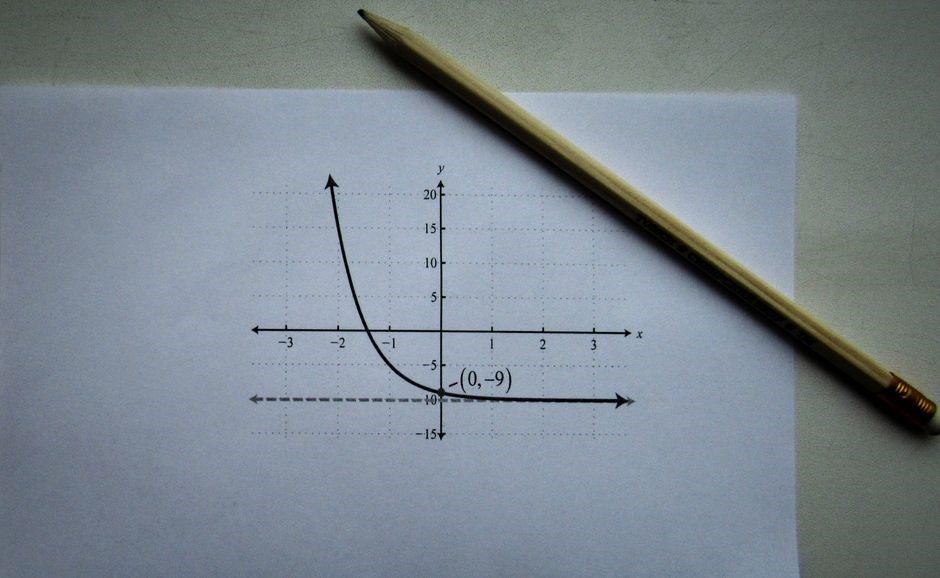
Vertical translations shift a graph up or down. The rule f(x)+k moves the entire graph upward by k units; f(x)−k moves it downward by k units. For instance, y=x² becomes y=x²+4 after an upward shift of 4, and y=x²−3 after a downward shift of 3. A linear function y=3x+2 becomes y=3x+5 after an upward shift of 3, and y=3x−1 after a downward shift of 3. A rational function y=1/(x+1) shifts up to y=1/(x+1)+2 and down to y=1/(x+1)−1. Trigonometric shifts: y=sin(x) → y=sin(x)+π/2 for an upward shift of π/2, and y=cos(x) → y=cos(x)−1 for a downward shift of 1. Practice questions: 1. Shift f(x)=√x up 3 units; 2. Shift g(x)=ln(x) down 2 units. 3. Shift h(x)=1/(x‑2) up 5 units. 4. Shift k(x)=tan(x) down π/4. 5. Shift m(x)=x³ up 1, then down 2. 6. Shift n(x)=e^x up 6. 7. Shift p(x)=|x| down 7. 8. Shift q(x)=sec(x) up π/3. 9. Shift r(x)=arctan(x) down 2. 10. Shift s(x)=x⁴ up 0.5. 11. Shift t(x)=1/(x²+1) down 3. 12. Shift u(x)=sin(x) up π. 13. Shift v(x)=cos(x) down π/2. 14. Shift w(x)=e^(x‑2) up 1. 15. Shift y(x)=ln|x| down 4. 16. Shift z(x)=x²+3 up 5. 17. Shift a(x)=√(x‑1) down 2. 18. Shift b(x)=1/(x‑3) up 4. 19. Shift c(x)=tan(x) down π/6. 20. Shift d(x)=arcsin(x) up 0.5. Use these to practice graph shifts. Remember that the sign of k determines direction. Practice also with inverse functions. Check your work by plotting points.
Horizontal Reflection Examples and Practice Questions
Horizontal reflections flip a graph over the y‑axis. The rule f(−x) replaces each x‑coordinate with its negative, mirroring the shape left‑to‑right. For example, y=x² becomes y=(−x)², which is identical to y=x²; however, y=x³ becomes y=(−x)³=−x³, producing a left‑handed cubic. A linear function y=2x+3 turns into y=−2x+3 after reflection. Trigonometric functions: y=sin(x) becomes y=sin(−x)=−sin(x); y=cos(x) becomes y=cos(−x)=cos(x). Rational functions: y=1/(x+1) becomes y=1/(−x+1)=1/(1−x). Practice problems: 1. Reflect f(x)=√x. 2. Reflect g(x)=ln(x). 3. Reflect h(x)=1/(x−2). 4. Reflect k(x)=tan(x). 5. Reflect m(x)=x³+2x. 6. Reflect n(x)=e^x. 7. Reflect p(x)=|x|. 8. Reflect q(x)=sec(x). 9. Reflect r(x)=arctan(x). 10. Reflect s(x)=x⁴. 11. Reflect t(x)=1/(x²+1). 12. Reflect u(x)=sin(x) + 1. 13. Reflect v(x)=cos(x)−2. 14. Reflect w(x)=e^(x‑2). 15. Reflect y(x)=ln|x|+3. 16. Reflect z(x)=x²+3. 17. Reflect a(x)=√(x‑1). 18. Reflect b(x)=1/(x‑3). 19. Reflect c(x)=tan(x)−π/4. 20. Reflect d(x)=arcsin(x)−0.5. Use these to practice graphing and identify key points. Verify by plotting a few points before and after reflection.

Vertical Reflection Examples and Practice Questions
Vertical reflections invert a graph across the x‑axis by multiplying the entire function by –1. The rule is y=–f(x). For example, y=x² becomes y=–x², turning the upward parabola into a downward one. A linear function y=3x+4 becomes y=–3x–4 after reflection. Trigonometric functions: y=sin(x) becomes y=–sin(x); y=cos(x) becomes y=–cos(x). Rational functions: y=1/(x+1) becomes y=–1/(x+1). Practice problems: 1. Reflect f(x)=√x. 2. Reflect g(x)=ln(x). 3. Reflect h(x)=1/(x–2). 4. Reflect k(x)=tan(x). 5. Reflect m(x)=x³+2x. 6. Reflect n(x)=e^x. 7; Reflect p(x)=|x|. 8. Reflect q(x)=sec(x). 9. Reflect r(x)=arctan(x). 10. Reflect s(x)=x⁴. 11. Reflect t(x)=1/(x²+1). 12. Reflect u(x)=sin(x)+1. 13. Reflect v(x)=cos(x)–2. 14. Reflect w(x)=e^(x–2). 15. Reflect y(x)=ln|x|+3; 16. Reflect z(x)=x²+3. 17. Reflect a(x)=√(x–1). 18. Reflect b(x)=1/(x–3). 19. Reflect c(x)=tan(x)–π/4. 20. Reflect d(x)=arcsin(x)–0.5. Verify each graph by plotting key points before and after the reflection to confirm the sign change.
When a function is reflected vertically, every y‑value changes sign while the x‑values remain unchanged. This operation preserves the domain but reverses the range. It is useful for visualizing odd and even functions, as odd functions satisfy f(–x)=–f(x). The reflection also affects asymptotes: horizontal asymptotes become horizontal but with opposite sign, while vertical asymptotes stay in place. Practice by sketching the original and reflected graphs side by side to observe the symmetry.
In worksheets, vertical reflection problems often pair with horizontal shifts to test combined transformations. For example, reflect f(x)=x² then shift right by 3 units to get y=–(x–3)². Students should identify the sequence of operations and apply the correct order: first reflect, then shift. This reinforces the concept that transformations are not commutative.
Use graphing calculators or software to verify your manual sketches, ensuring the reflected curve matches the negative of the original function at every point. Enjoy! Good!
Scaling transforms a function by multiplying the y‑values or x‑values by a constant factor. A vertical stretch by a factor k>1 multiplies every y‑value: y=k·f(x). A vertical compression uses 0